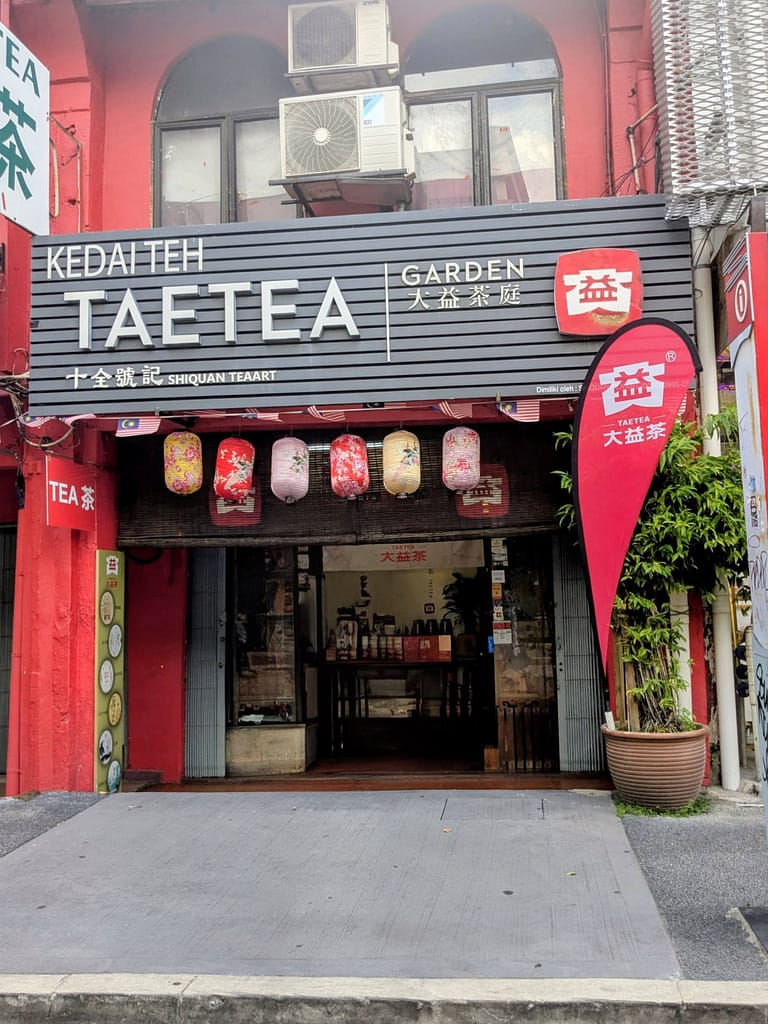
Hey guys! Today I’ll be telling you all about my visit to Shiquan Tae Tea Garden in Chinatown, Kuala Lumpur.
So I visited Malaysia in October 2025 for about 3 weeks. And I had the most wonderful time exploring the many tea shops and cafes in KL and visiting the Cameron Highlands.
This is actually my first article from my time spent in Malaysia. A little late, I know. But life has been life-ing away hard. And it’s been a struggle to get to the things I actually want to do.
But now that I’m here, let me tell you guys all about my visit to Shiquan Tae Tea Garden!
It was my first day out in KL, and I was ready to discover some new tea shops.
Malaysia, with its very diverse population, also has a very diverse tea culture. So, I was really excited to try as many different experiences as possible.
Doing a brief online search, I came across Tae Tea. It was a very old Chinese tea shop in the heart of Chinatown, super close to my hotel.
So my husband and I set out on foot to check it out.
Where is Shiquan Tae Tea Garden located?
Shiquan Tae Tea Garden is on Jalan Tun H S Lee, just a 2-minute walk from the Sri Maha Mariamman Temple.
Here’s the exact address and contact:
Address: No.135, Jalan Tun H.S. Lee, 50000 Kuala Lumpur.
Contact Number: +60 17 384 2029
But besides the store in Chinatown, they have several branches in KL and around Malaysia.
About Tae Tea
Interestingly, I only learned more about the history of Tae Tea after coming home and doing some research.
It turns out the brand’s history goes all the way back to China in 1940, when Mr. Fan Hejun established the Menghai Tea Factory in Yunnan.
Tae Tea is also known as Dayi Tea, which is hugely respected in the puerh world.
Over the years, they’ve become one of the most famous producers of puerh tea and are often considered the benchmark for puerh quality.
Their tea plantations are located in Southern Yunnan, specifically around Mount Bada and Mount Bulang, each spanning over 1600 acres.
Tae Tea officially opened their 2nd overseas branch in Kuala Lumpur in 2013.
Some of their most famous puerh teas include the 7542 raw cake, 7572 ripe cake, 7262 ripe cake, 8582 raw cake, and 8592 ripe cake.
Among these, the 7542 and 7572 are especially iconic and are considered industry standards in the world of puerh tea.
And if you’re wondering what those numbers actually mean, here’s a simple breakdown:
- The first two digits represent the year the tea recipe was created
- The third digit refers to the leaf grade, from 0–9, 0 being smallest, and 9 being largest
- The final digit represents the factory code
So in Tae Tea’s case, the number 2 refers to the Menghai Tea Factory.
If I had done this research before I visited, I would’ve definitely brought back some of their Puerh teas. Well, for next time then.
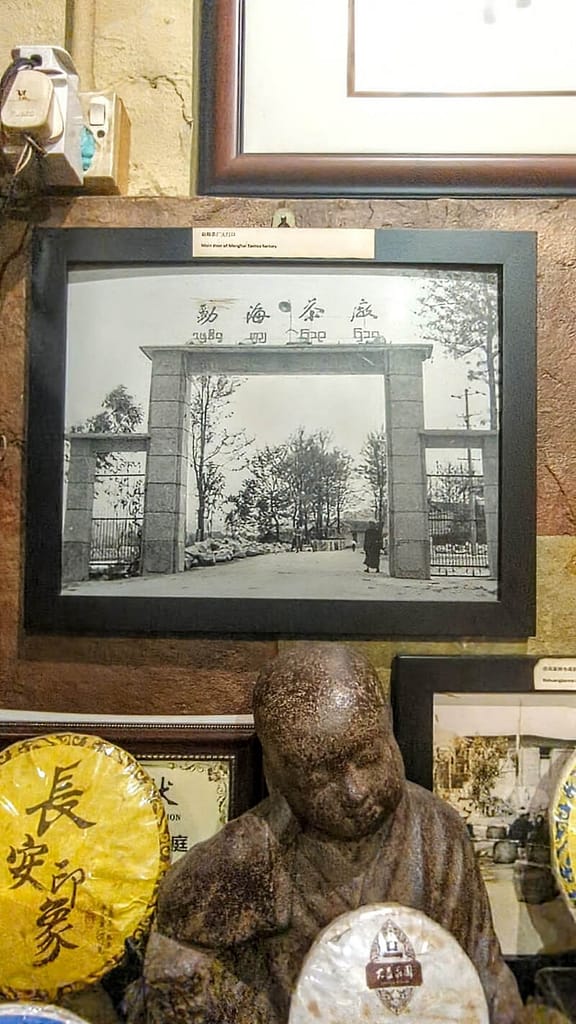
Inside Shiquan Tae Tea Garden
From the outside alone, it already felt like stepping into another era.
The bright red storefront, bamboo blinds, wooden fixtures, and classic Chinese decor stood out against the busy streets of Chinatown.
The moment we stepped inside, the atmosphere completely changed. Outside was loud and hectic. Inside was calm, warm, and filled with the comforting aroma of tea.
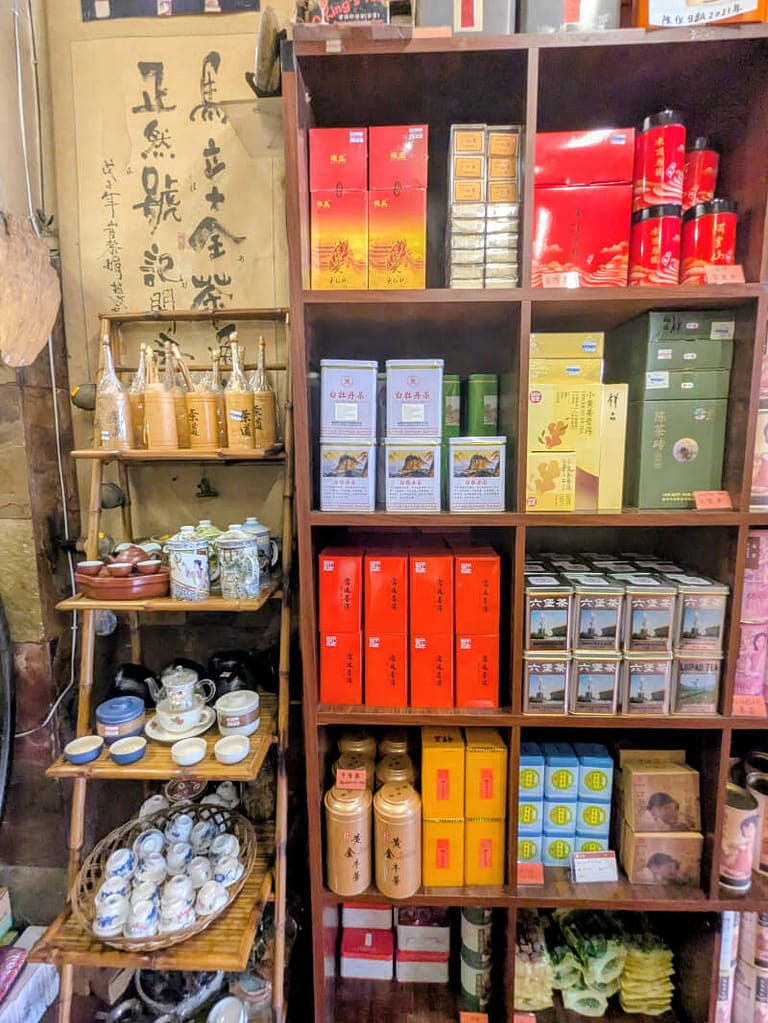
The shop itself is quite small, but every corner felt packed with history. There were floor-to-ceiling shelves lined with teas, stacks of aged pu-erh cakes displayed like collectibles, and little artifacts and old photographs hanging on the walls telling the story of the shop.
The moment we walked in, we were greeted by an elderly Chinese uncle who looked genuinely happy to have us there. That immediately made the experience feel welcoming.
We sat down at one of the tea tables in front of another uncle who was already in the middle of preparing tea. From there, it turned into a nonstop tea tasting session.
The uncle who greeted us kept bringing over different teas for us to try, while another uncle carefully brewed each one for us. In another corner of the shop, another group was having their own tea ceremony and conversation quietly in the background. The whole place felt cozy and lived-in.
At one point, I asked the uncle preparing tea for us how long the shop had been around, and he told us it was about 20 years old. Then I asked him how long he had been making tea, and he simply said, “All the time.”
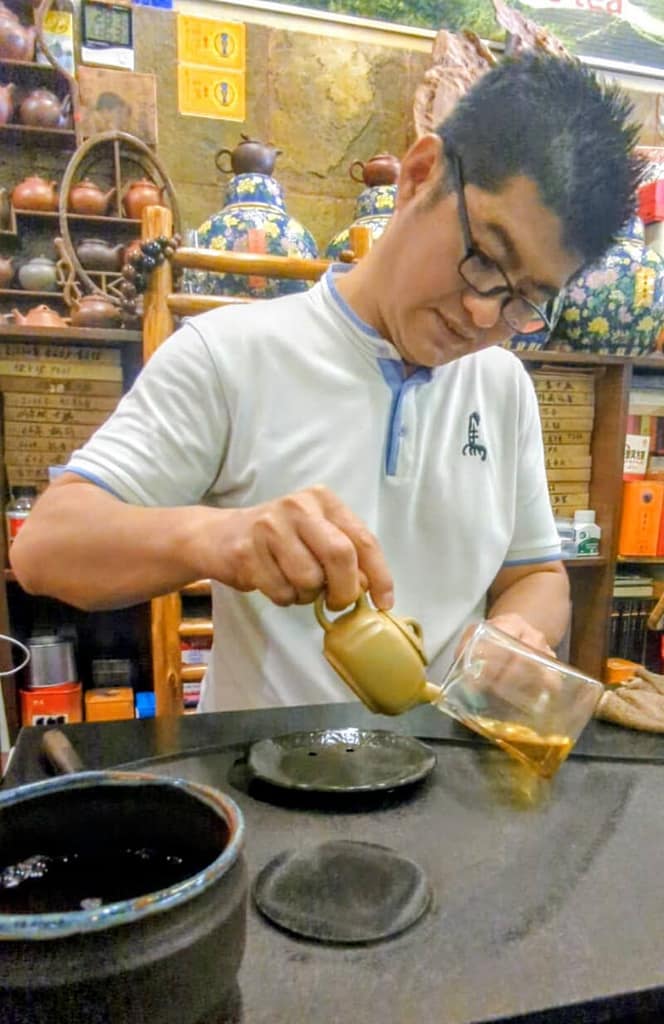
The teas we tried at Shiquan Tae Tea Garden
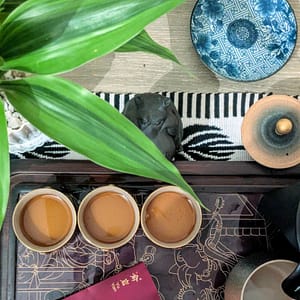
We tried several teas, including ginseng oolong, puerh, jasmine green tea, and later, some Taiwanese milk oolong.
The owner of the shop, an auntie, went into detail about the teas. She told us the ginseng oolong was very good for the immune system, and it makes you feel energized.
The Taiwanese milk oolong was very interesting. She explained that the tea gets its name from its characteristic milky flavor, even though there’s no added flavoring.
Sure enough, the milk oolong genuinely tasted creamy and milky.
While it was fascinating, personally, I don’t think it’s something I’d regularly seek out because when I’m drinking tea, I don’t necessarily want it reminding me of milk. Still, it was a fun experience trying something so unique.
The jasmine green tea ended up being our favorite by far. It was beautifully floral and fragrant without tasting artificial or overpowering. I liked it so much that I brought some home with me.
I also mentioned that I wanted to explore more white teas since I hadn’t really tried many before. She recommended their Bai Mu Dan white tea, and I ended up buying a small tin to bring home.
Keep an eye out for the review!
Final thoughts on Shiquan Tae Tea Garden, KL
All of this said, while the experience was enjoyable overall, I did slightly feel a bit rushed. Compared to my experiences in Hojo Tea or Yu Yan, the tea session was over quite quickly.
Maybe it was because the shop is small and only has two tea tables, or maybe we just visited during a busy time. I would’ve loved a little more conversation and a slower tea session with multiple infusions.
So if you’re looking for a long, slow tea experience where you sit for a while chatting about tea, this may or may not be the ideal spot. But to be fair, the owner did spend more time explaining the teas to us later on, which I appreciated.
But they have a huge selection of teas. And if you’re looking for a place to buy authentic, high-quality puerh teas from, then you should definitely check out Tae Tea.
Looking back, I honestly think I should’ve explored more of their puerh selection while I was there.
Overall, Shiquan Tae Tea Garden was a really interesting tea experience and definitely worth visiting if you enjoy authentic Chinese or Taiwanese tea.
The space may be small and a little busy at times, but there’s something special about sitting in a traditional tea shop, surrounded by decades of tea culture, quietly sipping tea while Chinatown buzzes outside.
I also visited another tea shop on the same day called Niko Neko, which was completely different. If you love matcha, you’ll love this cafe.